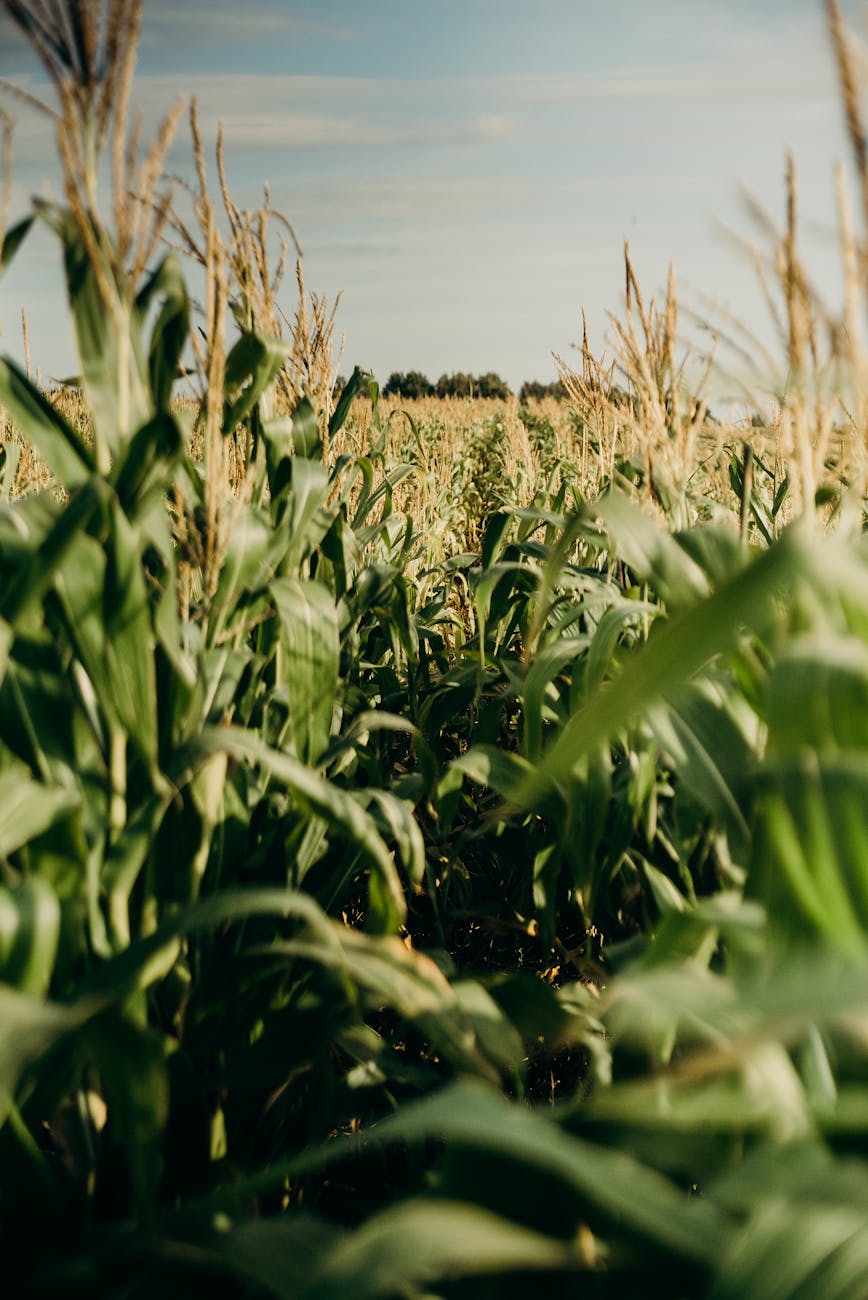
If you stray between the corn rows, you’ll get Lost. A baby near here died that way; her Name was Gretel. Diaper dragging, she stepped Past the sleeping dogs and through the broken
Fence, her mother watching soaps and sipping Tea. She noticed when the sun went down, when Gretel was asleep a mile from home. She Lay between the rows and no one knew which
Way she’d gone. They found her two days later, Pale and dead. Who lets a baby wander off like That? The worst of us would never be so Careless. Children that we love know corn leaves
Close above you, ten feet tall on all sides. Be wise. Stay in sight and don’t leave the yard.
Word to the Wise appeared first in The Chained Muse, March 2024.
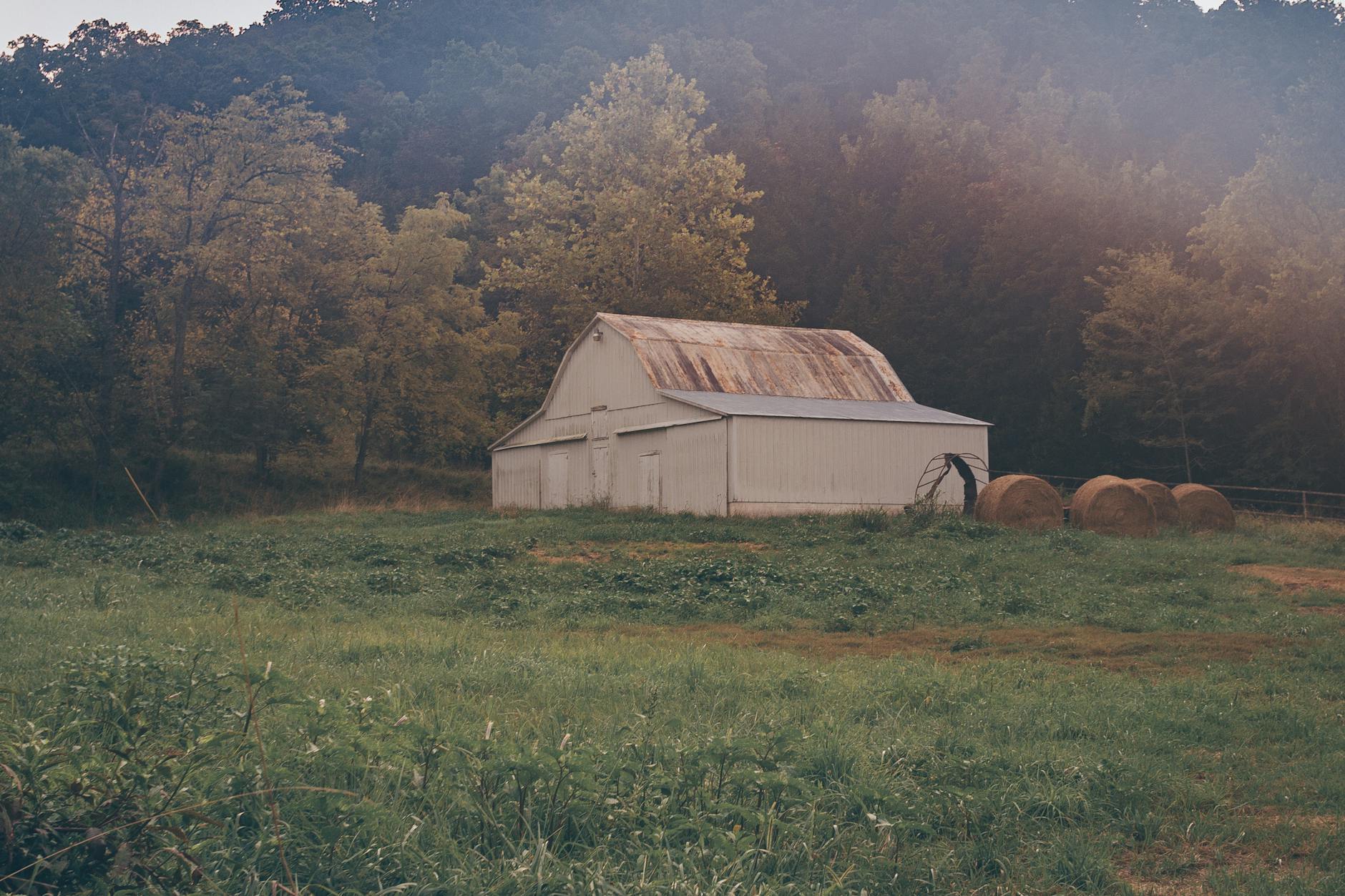
Along a gravel road, there lay a farm, A range of ground owned by my relatives. Their kitchen overlooked the bottom field Where hay grew silver-green around the barn And horses stood in stalls by cows whose milk Was sold. A diesel tractor pulled the plough
That tilled three hundred acres. Mud-caked plough Blades turned a quarter acre for a farm Wife’s garden. Aunt Jan’s best cow, Bossie’s, milk Was clover sweet. Most of my relatives Gave up their cows when feed to fill the barn Cost more than they were worth. That’s when a field
Of beans brought pennies per bushel. A field, With root rot slashed the acreage under plough. Worse, worthless crops were molding in the barn. It’s easy to lose money on a farm. Some seasons, only loans from relatives Could cover gaps not filled by selling milk.
In winter, driven snow as white as milk Lay three feet deep where summer’s soybean field Became a sled run. Merry relatives Forestalled their fears for next year’s yield. The plough Would last another season but the farm Would need to profit to repair the barn
Roof leaks before spring snowmelt soaked the barn Owls’ rafter nests. Brown rats befouled the milk Without the birds to dine on them. To farm A family place meant ragged nails and field Dirt in your eyes. At twelve, they learned to plough And rode horses to visit relatives.
I wasn’t close to my farm relatives, In my time, they used steel to build a barn Where at the back they kept an antique plough. They hated town where supermarket milk And eggs were old. They craved an open field Where skies, cathedral-high, above the farm
Are splashed across with clouds like drops of milk And ripe-gold hay ripples across the field As red-leafed maples ornament the farm.
Evening Street Press of Sacramento, CA is an independent press with a philosophy. Dedicated to the equality of all people, Evening Street publishes an anthology twice a year featuring poetry and prose of “clarity and depth.”
Evening Street Review #35, Autumn 2022 includes my newest story, Streets of Sorrow. A fictional tale inspired by events that took place in my hometown of Cedar Rapids Iowa, Streets of Sorrow is about a young writer meeting an old writer. As their friendship deepens, young Natalie’s new mentor teaches her to translate life into art.
Rock Salt Journal is a start-up online literary journal published from the coast of Maine. The project of passionate volunteers, the work featured in Rock Salt Journal, reflects the rugged beauty of New England shores and the folkloric traditions of its rich storytelling history.
My newest story, Of Course, I Didn’t, appears in the Fall 2022 issue, NOW LIVE at rocksaltjournal.com. Check out this fresh take on the tall tales and sea stories of days gone by to support the emerging writers and artists featuredin Rock Salt Journal.
In 2012, I was working as a bookseller at Barnes and Noble, the year they launched the first Nook e-reader. The Nook was the company’s effort to compete with Amazon’s market-changing Kindle. My fellow booksellers took an interest, learned the features, and celebrated with every unit sold. I flinched at the prizes awarded to the top Nook sellers. “Why the long face?” the assistant manager asked.
“This is going to put us out of business. They’re asking us to sign our own pink slips.” Fourteen months later, Barnes and Noble closed our location. It seems we didn’t sell enough Nooks. Or maybe we sold too many.
They’re asking us to sign our own pink slips.
But I bought a Nook of my own before the year was out. I can count on one hand the number of paper books I’ve bought since then. Even with the employee discount. Over time, I upgrade as new models come out. If you have the Kindle app on your iPad, that’s cool, too. As digital formatting improves and the vast catalogue of book titles increases year by year, e-readers and tablets save space on our bookshelves and give access to millions of books, newspapers, and magazines in seconds. If it cost me a boring job I’d had for too long anyway, the Nook also became my new library; the one with hundreds of titles that I can throw in my bag and pull out at will. I’m Hermione Granger with her magic camping sack.
Young people buy more e-books than their parents and grandparents. Earlier this month, E-books.com reported that 62% of e-book sales come from readers 18-45. College students and 20-something’s account for the largest share, 26% of total E-book sales. Maybe it’s too predictable. Is it any surprise that the young are quicker to embrace a digital alternative to the paper volumes of old? Weekend garage sales abound in my neighborhood, overflowing with the unwanted possessions of a by-gone generation. The days of dining tables for ten and home libraries with thousands of titles are passing. Surviving relatives pile them up for sale, clearing the clutter. Their own favorite novels, textbooks, histories, and gossip rags live on devices the size of steno pads. No dusty shelves or cardboard boxes required.
Am I suggesting you donate all your books to charity? Good luck. Goodwill, Salvation Army, and other local organizations are so inundated in my neighborhood, they turn me away from the donation point. “No room for those. Too many books already.” Should we save trees by eschewing wasteful paper books in favor of digital versions? Well, maybe. But I consider the environmental consequences of e-waste, too. At least trees can grow back.
So, meet me at the corner of Paper Street and Pixel Avenue. Bring as many books as you can fit into your backpack.



 Jennifer Frost Writes