Escoffery’s new collection of short stories fit together as neatly as a novel. “In Flux,” the collection’s opening piece gives the author’s answer to the peculiarly American question, “What are you?” As a nation obsessed with lineage, we’ve all considered mail-order DNA kits and websites promising to reveal our connections to royalty. We’re familiar with playground questions about ancestry. When Escoffery’s character, Trelawny, faces blunt identity questions, he examines that overwhelming American trait, assimilation.
These eight stories combine to form a picture of a Jamaican family in transition. As they gain a foothold in Florida, the needs of extended family and wishes to return to simpler times pull them back to their roots. Between biting winters at a northern university and sunny Jamaican beaches, the youngest son, Trelawny, finds an uncomfortable middle ground in his hometown, Miami. But misfortune hounds the family. Hurricanes, unpredictable income, and secrets from the past batter them as they struggle to stay connected. Underneath it lies a cracked foundation, a cherished house sinking.
It’s hard to avoid phrases like, “powerhouse short stories,” and “dazzling debut.” Each story enlightens the rest, making the collection a perfect balance of tenderness and grit, hope, and despair. Escoffery’s dark humor rings throughout, hip and down-to-earth. Defiant in the face of adversity, Trelawny wills himself through hard times. Even in despair, the faded American dream calls. There must still be a way to realize it. If there isn’t, he’ll make one.
Thanks to Net Galley for an Advance Reader’s Copy of this title. If I Survive You launches, September 2022.
Jamie Boud illustrates Figurines with skilled sketches guiding us through a story where reality, fantasy, and dreams are interchangeable. Parallel casts are introduced, and four different mothers emerge from the mix, but the story will be told by one mother (Anna) and her biological daughter (Rachel). Sorting the tangled threads of family dysfunction, adopted children, and the specter of mental illness is a tall order. When two very similar narrators (mother and daughter) compete to tell their stories, distinguishing between their voices is a challenge for readers who may get impatient with these ambiguities.
As Rachel and Anna unravel in tandem, there’s a missed opportunity to unpack changing approaches to mental health care. Modern psychiatric methods fail Rachel, who turns to self-medication. Anna, diagnosed in 1955, endures shock treatments to stop the voices in her head. Misguided therapies destroy Anna but failing to treat her is also an abuse. Rachel, fending for herself against depression, receives no professional help and never sees this paradox, ever unable to get better or worse. These themes are obscured by the minutiae of a teenager’s journal and the listlessness of untreated chronic depression.
It is too late in
history to raise
these issues with-
out acknowledging
decades of feminist
activism and the
modern movements
they inspire.
Figurines is a women’s story, but men direct it. Domineering mothers aside, the plot hinges on the opinions of men in authority. Anna and Rachel both try modeling (and other means) to reassure themselves they are desirable. Anna pines for her brother, Frederick, to rescue her from the male doctors who won’t release her. Rachel’s adopted father repeatedly devalues her. To get started on her quest to find lost relatives, she needs her boyfriend to do the first Google search. But is he a boyfriend? She doesn’t know until he reassures her. It is too late in history to raise these issues without acknowledging decades of feminist activism and the modern movements they inspire. Rachel doesn’t see herself controlled by men, but the book won’t resonate with readers who do.
Boud provides all the pieces of this novel but leaves his readers to make them fit. Long passages of detailed narration demand careful attention, but when the time comes to draw a conclusion, we are left on our own to discover meaning. The author trusts us to make sense of what we are reading. But when readers have that kind of license, they might use it to find a more approachable novel.
Thanks to Reedsy Discovery for an Advance Reader’s Copy of this title. Figurines launches 3 May 2022. This review appeared first on Reedsy.com.
It’s hard to avoid phrases like, “powerhouse short stories,” and “dazzling debut.” Each story enlightens the rest, making the collection a perfect balance of tenderness and grit, hope, and despair.
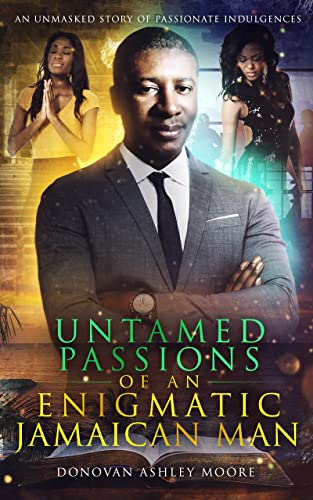
Untamed Passions of an Enigmatic Jamaican Man by Donovan Moore
Reviewed, 20 May 2022
Moore isn’t shy with the juicy details. Not so with matters of the heart. He withholds recollections of childhood and close friendships. On an endless quest for a love that satisfies the soul, he admits himself a philandering husband doomed to the sadness of repeated losses.
In the Marble Maze is one of many memorials Gudnason creates for Engilbjort. As he sorts through relics, photos, and clothing, he takes time to remember.
The story of a Southern Gothic everyman drawn by Fate through a late-20th century coming-of-age, My Secret Radio reflects on humanity and the cycles of history.
Written before her highly acclaimed Booker Prize-winning novels Wolf Hall and Bring Up the Bodies, Mantel comes to terms with a childhood of illness and poverty, nosey neighbors and social sleights. The keen girl who observes it all is a born writer.
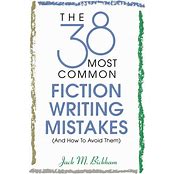
The 38 Most Common Fiction Writing Mistakes (And How to Avoid Them) by Jack M. Bickham
Reviewed, 29 October 2021
This comprehensive style guide leads the way through a minefield of writing pitfalls. With chapter titles like, Don’t Make Excuses and Don’t Worry What Mother Will Think, Bickham leads aspiring writers over the narrow path to great stories.
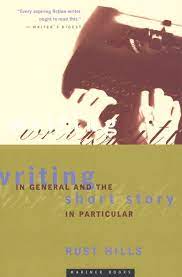
Writing In General and the Short Story In Particular by Rust Hill
Reviewed, 16 October 2021
Rust Hill breaks down modern fiction with the insights of a veteran reader, editor and lecturer, assuring us in his introduction that originality makes the difference between “slick fiction” and a fine story. “If you’ve actually got that, you’re the kind of person who could possibly really use this book, without probably really needing it….”











 Jennifer Frost Writes